
 Call a Friend
 Create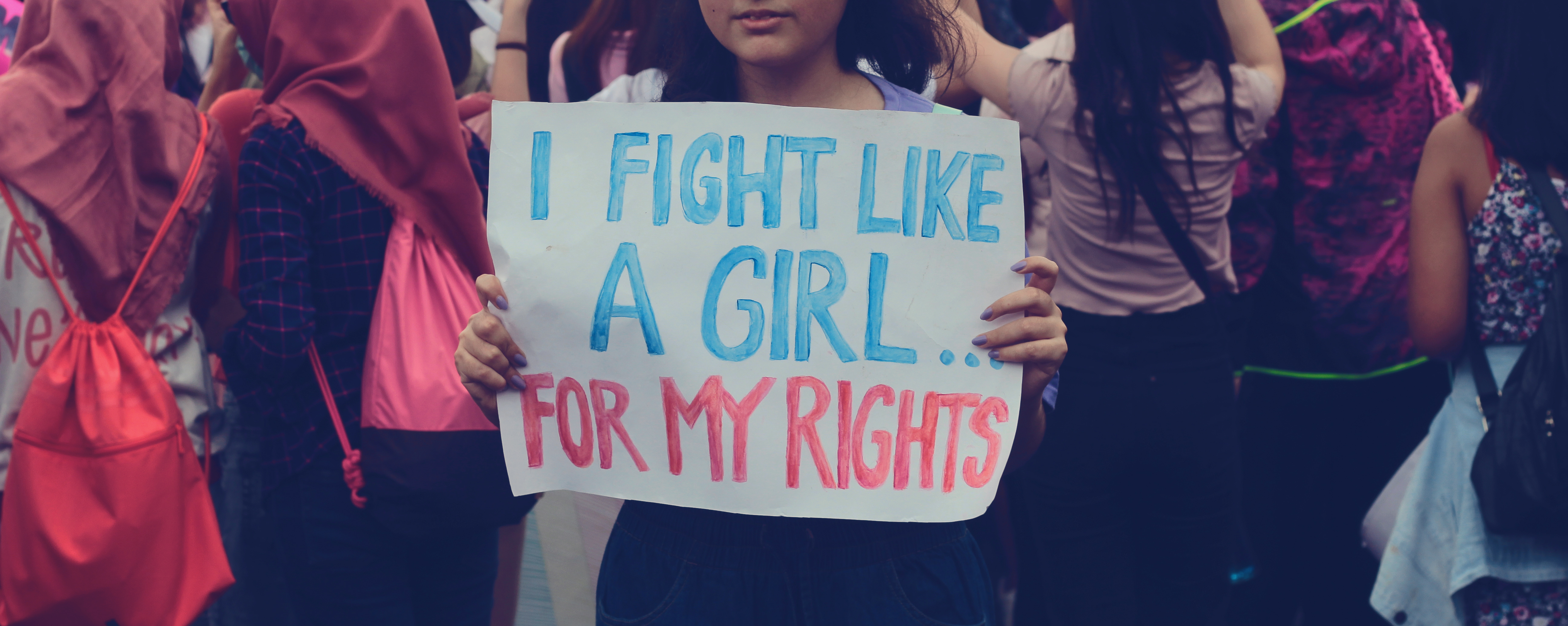
A curious new trend has been spreading across TikTok and social media in recent months: “microfeminism.”
The term refers to small, everyday acts through which women subtly push back against traditional gender assumptions. Some examples are humorous and intentionally lighthearted: putting women’s names first in emails to couples, referring to unknown animals as “she” instead of “he,” assuming the colorful cocktail belongs to the man at the table, or jokingly greeting audiences with “Hello ladies and sons of ladies.” ()
On the surface, the trend can appear playful, ironic, even slightly absurd.
But beneath the humor sits something more psychologically revealing.
Microfeminism seems to have emerged from a growing sense among many women that everyday social life still contains countless small assumptions about gender — assumptions so normalized they often pass unnoticed until deliberately reversed.
The reaction to these reversals is itself interesting.
Many of the “microfeminist” behaviors simply mirror assumptions women have quietly experienced for decades: that women will organize social life, manage emotional labor, prepare meals, soften conversations, defer socially, or absorb subtle forms of imbalance without complaint.
When those same assumptions are momentarily redirected toward men, even jokingly, they can suddenly feel visible.
That visibility may partly explain why the trend resonates.
Importantly, most microfeminism is not political activism in the traditional sense. It is less about protest than atmosphere — a way of expressing awareness of subtle social asymmetries that women often experience in ordinary life.
And perhaps that distinction matters.
Because many women today appear caught between two competing realities.
On paper, enormous progress has occurred. Women have more legal rights, educational opportunities, professional influence, financial independence, and social autonomy than at any previous point in modern history.
At the same time, many women still report feeling emotionally overburdened, visually scrutinized, digitally objectified, professionally underestimated, or quietly expected to carry disproportionate relational and domestic responsibilities.
Modern gender relations therefore exist in an unusually complicated psychological moment.
The older rules have weakened.
But the new rules remain unsettled.
Social media intensifies this instability.
Platforms like TikTok do not merely reflect culture; they accelerate emotional patterns within it. Trends become identity signals. Frustrations become performances. Humor becomes social commentary. Small private experiences become collective narratives within days.
This can be constructive.
But it can also become polarizing.
One risk surrounding trends like microfeminism is that they may slowly drift from playful social observation into generalized resentment. Online culture often rewards escalation. Mild commentary gradually becomes sharper, more cynical, more hostile, because emotionally charged content spreads further than calm nuance.
And modern gender discourse already carries considerable tension.
Across much of the Western world, surveys show rising mistrust and frustration between young men and women. Researchers increasingly study phenomena such as loneliness, dating pessimism, online misogyny, “heterofatalism,” and the influence of algorithm-driven gender conflict online. ()
Under these conditions, even small cultural trends can become symbolic battlegrounds.
Yet the deeper appeal of microfeminism may not actually be hostility toward men.
It may instead reflect a desire for recognition.
Many women are not asking for superiority. They are asking for awareness — awareness of the countless subtle expectations, pressures, and asymmetries that often shape female social experience without being openly acknowledged.
The emotional logic behind many microfeminist gestures is essentially:
“Notice what normally goes unnoticed.”
That is not an unreasonable human impulse.
At the same time, healthy societies probably cannot sustain themselves on permanent mutual grievance.
The internet increasingly trains people to interpret one another through adversarial frameworks: men versus women, feminism versus masculinity, empowerment versus oppression, vulnerability versus blame. Once these dynamics become algorithmically amplified, ordinary human misunderstanding can begin hardening into identity-based hostility.
This is especially unfortunate because most people, regardless of sex, are navigating genuine pressures.
Many women feel exhausted by beauty expectations, emotional labor, safety concerns, online harassment, and persistent social judgment.
Many men feel uncertain about identity, purpose, emotional expression, dating expectations, and rapidly changing cultural norms.
Both realities can exist simultaneously.
And neither is solved particularly well by contempt.
One of the quieter dangers of online discourse is that it can slowly erode goodwill between ordinary people who would otherwise likely care for one another perfectly well in real life.
Humor can become bitterness.
Self-protection can become cynicism.
Awareness can become suspicion.
The healthiest version of movements like microfeminism may therefore be the version that preserves perspective and humanity — one that notices subtle inequality without losing compassion, humor, or emotional proportion.
Because ultimately, most meaningful human relationships are not built through ideological victory.
They are built through mutual respect, emotional maturity, attentiveness, fairness, and the ability to recognize another person’s humanity even when experiences differ.
Perhaps that is the more useful question beneath this trend:
Not whether women or men “have it worse,” but whether modern culture still encourages enough empathy for people to remain curious about each other rather than retreating into defensive camps.
In a digital environment increasingly optimized for outrage and tribal identity, even that may now count as a quiet form of rebellion.
Inspired by recent reporting and commentary on “microfeminism” and contemporary gender culture.
Sources:
The Guardian. “‘Hello ladies and sons of ladies’: women are using ‘microfeminisms’ to flip the gender script.” May 2026. ()
The Guardian. “The Guardian view on gen Z: young men hold startling views about women – inequality may be to blame.” March 2026. ()
The Guardian. “Men and women hate each other | The Global Dating Crisis.” May 2026. ()
The Guardian. “We must protect young people from online harms.” February 2026. ()