
 Call a Friend
 Create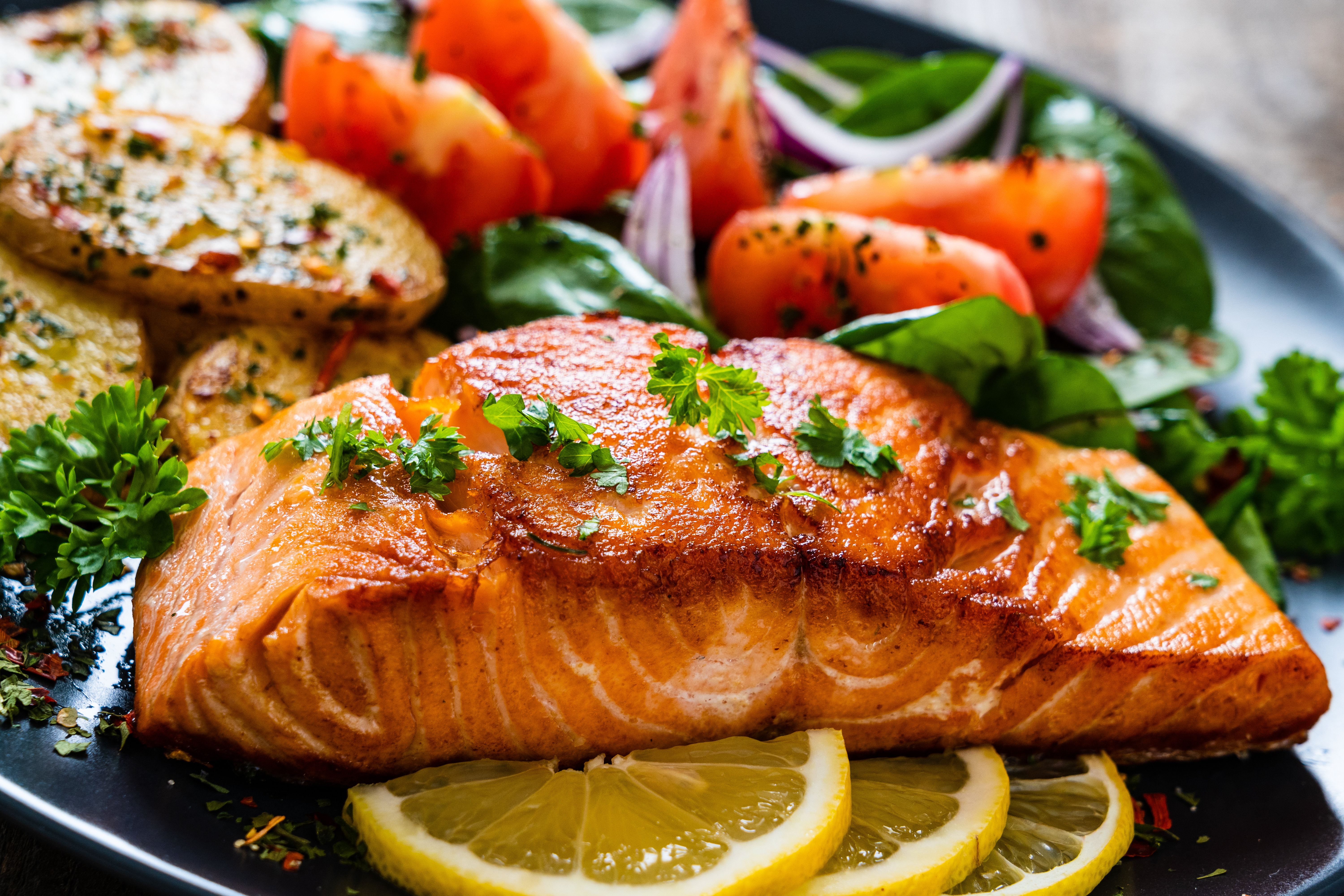
For years, consumers have been told a relatively simple story about seafood:
Wild-caught fish are “natural” and healthy.
Farm-raised fish are industrial, crowded, and nutritionally inferior.
But reality turns out to be more complicated than that.
A recent article discussing expert opinions on farm-raised versus wild-caught seafood highlighted something increasingly common in modern nutrition science: simplistic food narratives often fail under closer examination. (foxnews.com)
Many nutrition researchers now argue that the health differences between farmed and wild fish depend heavily on species, feed quality, environmental conditions, contamination exposure, sustainability practices, and how the fish is ultimately prepared and consumed.
In other words, the question is not:
“Is farm-raised fish bad?”
The more useful question is:
“What kind of fish, raised under what conditions, and replacing what in the diet?”
That distinction matters.
Because modern nutrition conversations often become emotionally polarized in ways that exceed the actual science. Foods become morally categorized as “clean” or “toxic,” “natural” or “processed,” “good” or “bad.” Yet human biology is rarely that binary.
Fish remains one of the most consistently recommended foods across many evidence-based dietary patterns, including Mediterranean-style diets associated with lower cardiovascular risk and improved long-term health outcomes. Seafood provides high-quality protein, omega-3 fatty acids, selenium, iodine, vitamin D, and other nutrients important for neurological and cardiovascular function.
The larger health picture therefore matters more than purity narratives alone.
One reason wild-caught fish developed a nutritional reputation is that some species naturally contain higher levels of omega-3 fatty acids due to their diet and environment. Wild salmon, for example, may sometimes have a leaner nutrient profile compared with conventionally farmed salmon.
However, farmed fish are not nutritionally empty. In fact, some farm-raised fish contain substantial omega-3 levels as well, partly because modern aquaculture feed formulations are increasingly engineered to preserve nutritional quality. (foxnews.com)
The issue becomes even more nuanced when contamination risks are considered.
Wild fish are not automatically “clean.” Depending on species and location, wild seafood may accumulate mercury, microplastics, industrial pollutants, or environmental contaminants. Larger predatory species — such as swordfish, king mackerel, and some tuna species — can accumulate higher mercury levels over time because of their position in the marine food chain.
Meanwhile, poorly regulated aquaculture can create legitimate concerns regarding overcrowding, disease management, antibiotic use, waste runoff, and ecological impacts.
Both systems therefore involve trade-offs.
And modern consumers increasingly face the challenge of navigating nutritional information inside an environment dominated by headlines, social media simplifications, wellness influencers, and algorithm-driven fear amplification.
This broader psychological environment deserves attention.
Food anxiety has become remarkably common in modern life.
Many people now approach eating with a persistent undercurrent of vigilance, guilt, optimization, or confusion. Every week seems to produce a new warning: seed oils, sugar, carbohydrates, gluten, dairy, artificial sweeteners, microplastics, pesticides, ultra-processed foods, endocrine disruptors, preservatives.
Some of these concerns are scientifically legitimate.
But constant exposure to fragmented nutritional alarmism can gradually create an unhealthy relationship with food itself.
Researchers increasingly study phenomena such as orthorexia — an obsessive fixation on “perfect” or “pure” eating that can paradoxically damage psychological wellbeing. In affluent societies especially, nutrition discourse sometimes begins shifting from health promotion into identity signaling, moral performance, and chronic self-monitoring.
Under these conditions, food ceases to become nourishment and instead becomes a continuous source of low-grade stress.
Ironically, some of the healthiest dietary patterns observed globally share a very different psychological atmosphere.
Traditional Mediterranean, Japanese, Nordic, and Blue Zone dietary cultures tend to emphasize moderation, consistency, community, simplicity, and long-term habits rather than constant dietary panic. Meals are integrated into ordinary life rather than treated as endless optimization projects.
That perspective may be worth preserving.
None of this means consumers should ignore food quality. Responsible sourcing matters. Environmental sustainability matters. Aquaculture standards matter. Overfishing matters. Transparency matters.
But it does suggest that nutritional wisdom often lies closer to calm discernment than ideological absolutism.
In practical terms, many nutrition experts now recommend focusing on broader patterns:
• Eating seafood regularly if medically appropriate
• Choosing a variety of species
• Favoring lower-mercury fish more often
• Prioritizing reputable sourcing where possible
• Preparing foods in balanced ways
• And avoiding the trap of turning every dietary decision into a referendum on personal purity
This may be especially important in the age of social media wellness culture.
Online platforms naturally reward certainty, intensity, and emotional language. “Everything you thought you knew is wrong” spreads further than “the evidence is nuanced.” As a result, nutrition information increasingly arrives not as patient scientific interpretation, but as viral emotional stimulation.
Human physiology, however, remains stubbornly complex.
Health is rarely determined by one single ingredient or isolated food choice. Sleep, stress, movement, relationships, income stability, loneliness, alcohol use, smoking, environmental exposure, and overall dietary patterns all interact together over decades.
A salmon fillet cannot carry the full burden of modern health anxiety.
Perhaps the most useful takeaway from the current discussion is therefore not whether farm-raised fish are universally “good” or “bad,” but something more grounded:
Healthy living probably depends less on dietary perfection than on sustainable, informed, reasonably balanced habits maintained calmly over long periods of time.
And in a culture increasingly shaped by alarm, optimization, and fear-based attention economics, even approaching food with moderation and perspective may now count as a small act of psychological resistance.
Inspired by recent reporting and expert commentary on aquaculture, nutrition science, and seafood health research.
Sources:
Fox News. “Is farm-raised fish really worse than wild-caught seafood? Experts sound off.” May 2026. https://www.foxnews.com/food-drink/farm-raised-fish-really-worse-than-wild-caught-seafood-experts-sounds-off
Harvard T.H. Chan School of Public Health. “Fish: Friend or Foe?” https://nutritionsource.hsph.harvard.edu/fish/
American Heart Association. “Fish and Omega-3 Fatty Acids.” https://www.heart.org
National Institutes of Health Office of Dietary Supplements. “Omega-3 Fatty Acids Fact Sheet.” https://ods.od.nih.gov/factsheets/Omega3FattyAcids-HealthProfessional/
Food and Agriculture Organization of the United Nations (FAO). “The State of World Fisheries and Aquaculture.” https://www.fao.org