
 Call a Friend
 Create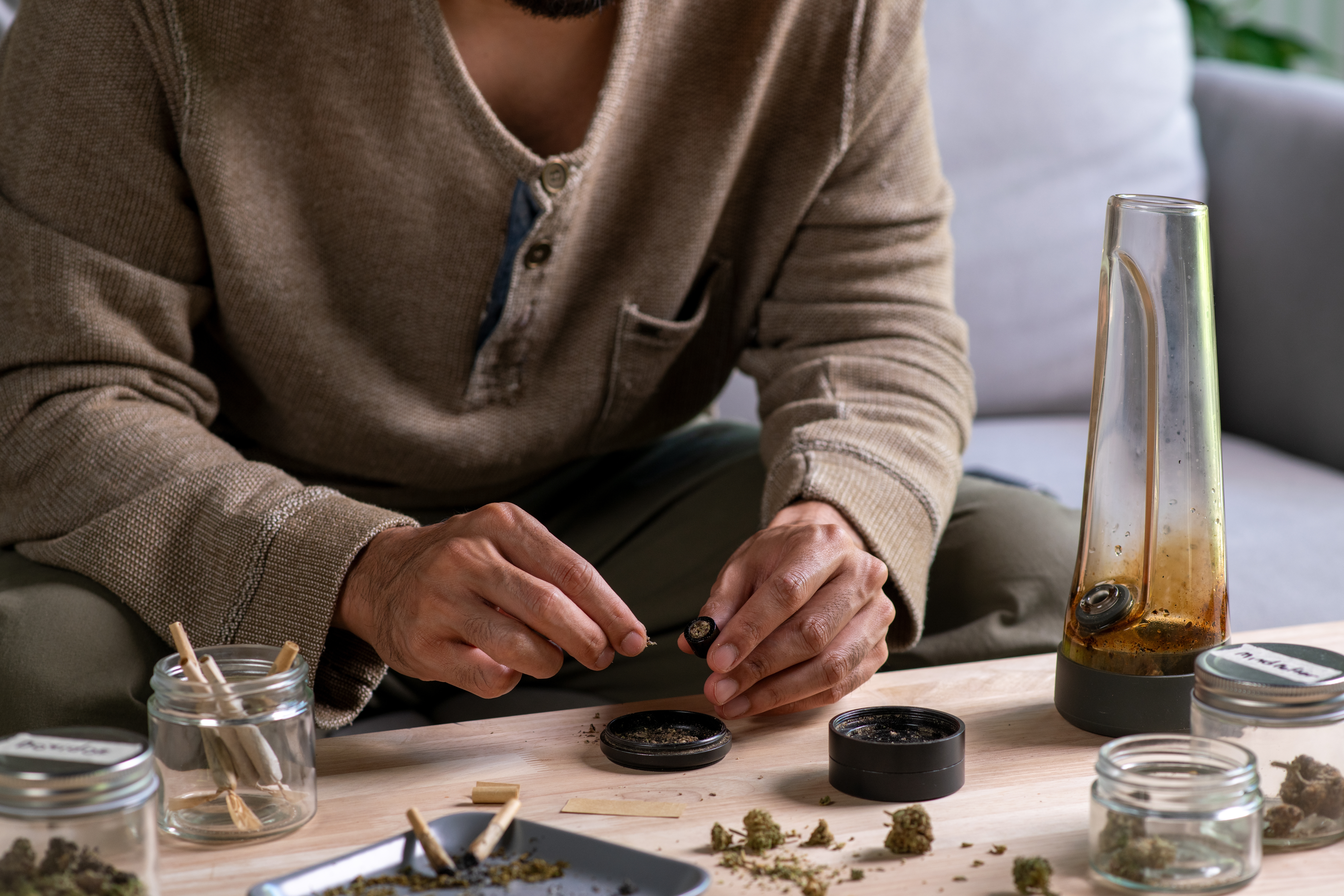
Modern medicine is full of treatments that promise relief.
Relief from anxiety.
Relief from sadness.
Relief from difficult memories.
Relief from emotional pain.
Few treatments have generated as much public interest in recent years as medicinal cannabis. Across North America, millions of people report using cannabis products to help manage anxiety, depression, post-traumatic stress disorder (PTSD), and other mental health challenges.
But a major new scientific review suggests the evidence may not be as strong as many people assume.
Researchers publishing in The Lancet Psychiatry conducted the largest review of medicinal cannabis and mental health to date, analyzing 54 randomized controlled trials conducted over more than four decades. Their conclusion was striking: they found no convincing evidence that medicinal cannabinoids effectively treat anxiety disorders, depression, or PTSD.
The findings challenge a belief that has become increasingly common as cannabis products have become more widely available.
Why the Gap Exists
At first glance, the results may seem surprising.
Many people sincerely report that cannabis helps them feel calmer, sleep better, or temporarily escape distressing thoughts.
Researchers do not necessarily dispute those experiences.
The question is different.
The question is whether cannabis improves the underlying condition over time.
A treatment can reduce discomfort in the moment without meaningfully improving long-term outcomes. Painkillers reduce pain without healing a broken bone. Alcohol can temporarily reduce anxiety without resolving its causes. The distinction between symptom relief and recovery is one of the oldest challenges in medicine.
The researchers expressed concern that widespread cannabis use for mental health conditions could potentially delay more effective treatments or, in some cases, contribute to other difficulties such as dependency or worsening psychiatric symptoms.
The Appeal of Immediate Relief
The popularity of cannabis for mental health is understandable.
Anxiety, depression, and trauma can be deeply painful experiences. Many people spend years searching for relief, often after disappointing encounters with healthcare systems, long waiting lists, or treatments that failed to help.
When something appears to provide immediate comfort, it is natural to hope it may also provide healing.
Yet human beings are not always good at distinguishing between the two.
We often assume that what makes us feel better today will also help us flourish tomorrow.
Sometimes that is true.
Sometimes it is not.
The Limits of Certainty
Importantly, the researchers were careful not to claim that the question has been settled forever.
Many of the existing studies were small. Evidence quality varied considerably. More rigorous research is still needed. Some limited benefits were observed for a handful of other conditions, although the evidence was generally weak.
Science rarely delivers simple answers.
Instead, it gradually reduces uncertainty.
This review does not tell us that cannabis is useless.
It tells us that the evidence supporting its use for common mental health conditions is much weaker than many people believe.
A Lydia™ Perspective
Perhaps the most interesting lesson is not about cannabis.
It is about human nature.
When we are suffering, we naturally look for relief.
There is nothing wrong with that.
But relief and recovery are not always the same thing.
One offers comfort.
The other creates change.
Sometimes the hardest part of healing is accepting that meaningful improvement may require patience, support, difficult conversations, lifestyle changes, therapy, relationships, or treatments that work more slowly than we would like.
The promise of a quick solution is always attractive.
Yet many of the most important forms of healing are gradual.
Perhaps that is why medicine continually reminds us to ask not only:
"Does this make me feel better?"
but also:
"Does this help me become well?"
Further Reading & Sources
This article is original Lydia.com commentary inspired by publicly available reporting and research.
- Wilson, J. et al. The efficacy and safety of cannabinoids for the treatment of mental disorders and substance use disorders. The Lancet Psychiatry (2026).
- University of Sydney. No evidence to suggest medicinal cannabis is effective for depression, anxiety or PTSD (2026).
- Reuters. Cannabis shows little benefit for most mental disorders, data review finds (2026).
- Scientific American. Medical cannabis isn't an effective treatment for anxiety, depression or PTSD (2026).
- The Guardian. Cannabis is not an effective treatment for common mental health conditions, says review (2026).
Lydia™ provides independent editorial commentary inspired by publicly available research and reporting. Readers should not interpret this article as medical advice. Mental health conditions should be assessed and treated in consultation with qualified healthcare professionals.